
A Nation Mad for Horses: Ireland’s Love Affair with Racing (and Why It Runs in Our Blood at Setanta)
There’s a moment every Irish person recognises. It might come on a wet Tuesday in March, gathered around a television in a country pub, roaring at a horse most of us couldn’t pick out of a lineup an hour earlier. It might come at the Curragh on a summer’s evening, pint in hand, watching the string canter down to the start. Or it might come, quietly, in a field in County Longford, leaning on a gate to watch a mare and her foal graze in the evening light. Whatever form it takes, it’s unmistakably Irish: a deep, generational, almost irrational love of the horse.
At Setanta Chauffeur Tours, we spend our days driving visitors through the landscapes that shaped this obsession — past the studs, the gallops, the racecourses, and the quiet paddocks where the next Cheltenham winner might be taking its first wobbly steps. It felt like time to write down why this sport matters so much here, and why, for me personally, it’s never just been background noise.
A Sport Woven Into the Landscape
Ireland doesn’t just watch horse racing — it produces the horses that win the biggest races in the world. Despite being a small island nation, Ireland is one of the top thoroughbred breeding countries on the planet, punching enormously above its weight at Cheltenham, Aintree, Ascot, and racecourses across the globe. County Kildare, with the Curragh at its heart, is often called the heartland of Irish racing and breeding — thousands of acres of limestone-rich grassland, ideal for building the bone and stamina that champion racehorses need.
But this isn’t confined to one county. Drive through the midlands, through Tipperary, through parts of our own County Longford, and you’ll pass stud farms and training yards tucked behind neat wooden rail fencing, mares and foals dozing in the shade of hedgerows, young horses testing their legs in paddocks that have raised champions for generations. It’s an industry that touches an extraordinary number of Irish livelihoods — breeders, trainers, jockeys, grooms, farriers, vets, stable staff, bloodstock agents — and it does so in both the flat racing world and the uniquely Irish passion for National Hunt (jumps) racing.
That National Hunt tradition deserves its own mention, because it’s arguably where Ireland’s heart beats loudest. While flat racing has its glamour, it’s the jumps game — the chasers and hurdlers, the mud, the risk, the sheer heart required to clear a fence at speed — that captures the Irish imagination most completely. Cheltenham Festival in March isn’t just a race meeting for Irish racing fans; it’s closer to a national pilgrimage, with tens of thousands crossing the Irish Sea every year to cheer on horses trained just down the road from where they grew up.
Paul’s Own Connection to the Sport
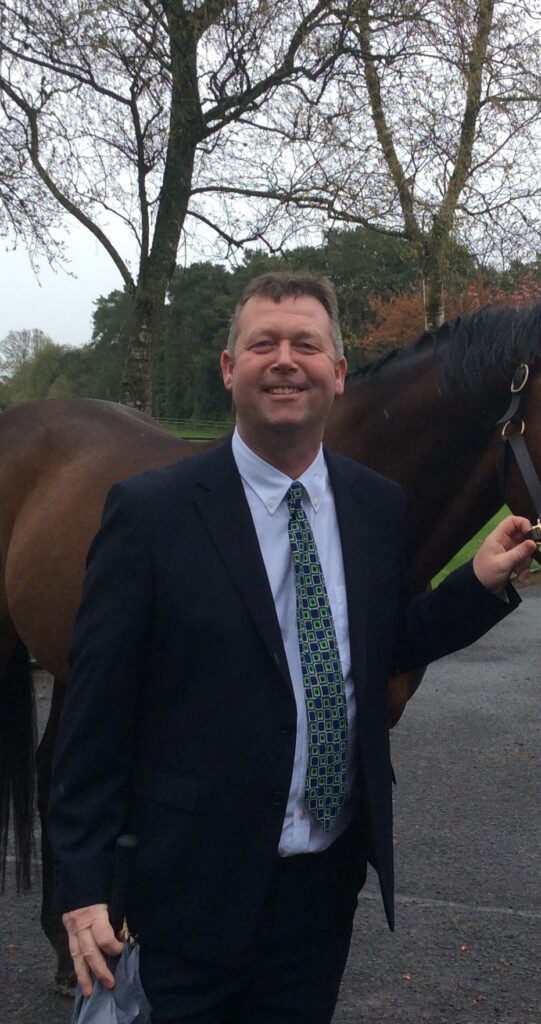
I’ve been fortunate enough over more than 25 years in Irish tourism to bring visitors close to this world, but my own interest in racing goes well beyond the professional. Like a lot of people around here, I’ve spent plenty of hours poring over form, working out weights and going, trying to spot the horse that the market hasn’t quite priced correctly yet — particularly for the big cards at the Curragh, where the form study feels less like a hobby and more like a genuine puzzle worth solving.
There’s something particularly satisfying about that kind of close attention to the sport. It’s not just about picking winners — though that helps — it’s about understanding bloodlines, tracking how a horse has progressed over a season, noticing which trainers tend to have their string flying at a certain time of year. It’s the same instinct, I think, that draws so many Irish people to racing in the first place: an appreciation for the horse as an athlete, and a genuine curiosity about what it takes to produce a champion.
That curiosity has taken me to plenty of yards and studs over the years, meeting some remarkable horses along the way.
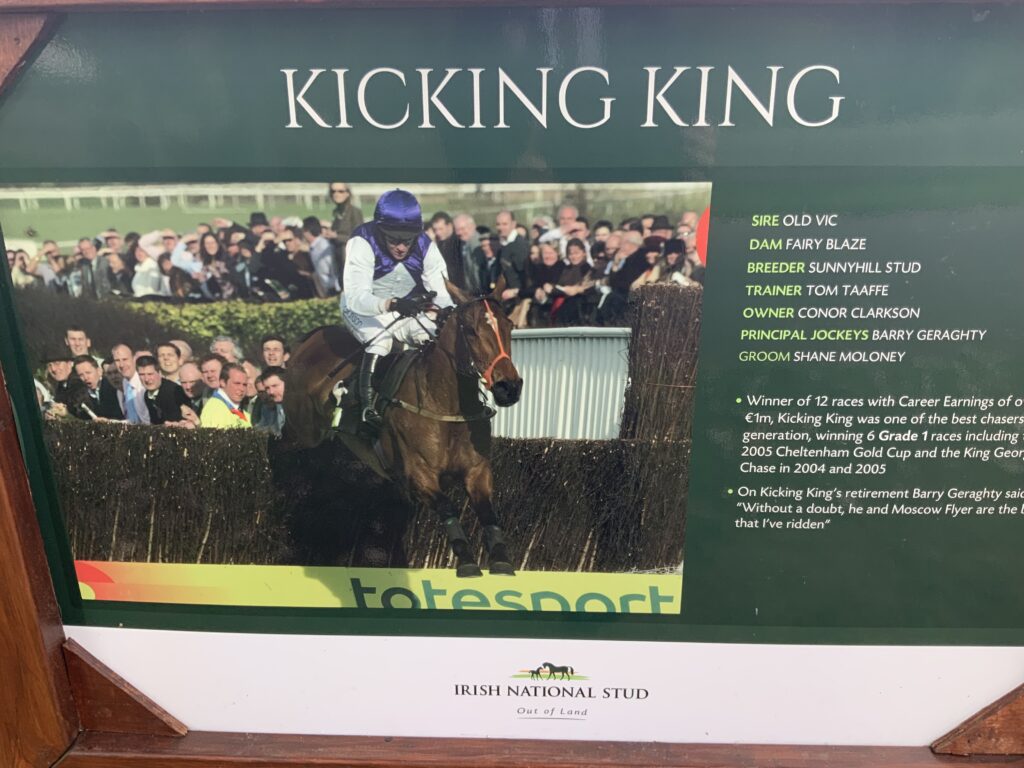
One that has always stood out is Kicking King, a horse whose story is written into the record books of Irish racing history. Trained by Tom Taaffe and ridden principally by Barry Geraghty, Kicking King won 12 races in his career, with earnings of over €1 million, and claimed six Grade 1 victories — including the 2005 Cheltenham Gold Cup and back-to-back King George VI Chases in 2004 and 2005. Standing in front of the plaque commemorating him at the Irish National Stud, it’s hard not to feel the weight of what that horse achieved. Barry Geraghty himself, on Kicking King’s retirement, rated him among the very best he ever rode.
Meeting horses like that up close — and simply spending time around the mares, foals, and young stock that make up the everyday rhythm of Irish stud life — is one of the genuine privileges of a career spent showing people this country.
Why the Foal in the Field Matters as Much as the Winner at Cheltenham
It’s easy to focus on the glamour — the winning post, the trophy, the roar of the crowd. But the real story of Irish racing happens months and years earlier, in fields exactly like the ones our guests pass on tours through the midlands and beyond.
A mare and her foal, grazing quietly together, represent the true starting point of this entire industry. That gangly foal, all long legs and short attention span, might be a future Grade 1 winner — or might simply live out a happy life as somebody’s much-loved hunter or hack. Either way, the care, the bloodline decisions, and the patient generations of breeding that go into producing Irish thoroughbreds is a story that deserves as much attention as the races themselves.
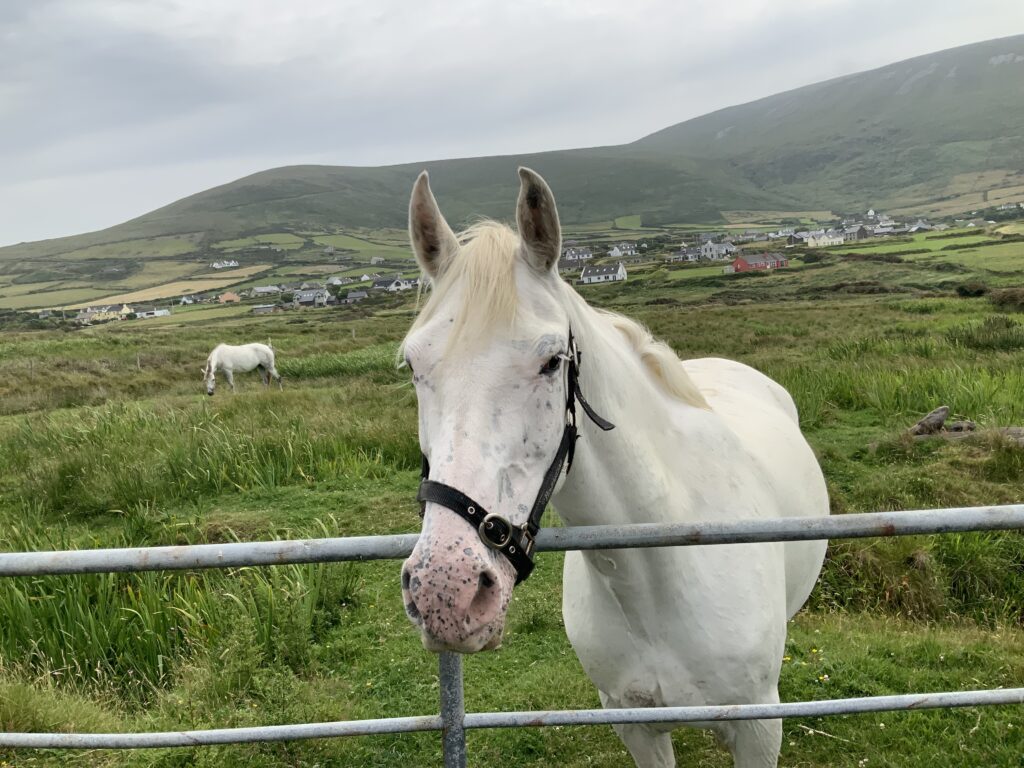
It’s also worth remembering that Ireland’s relationship with horses extends well beyond the thoroughbred racing and breeding world. Travel out west to places like the Dingle Peninsula and you’ll find hardy native ponies grazing on hillsides that have supported horses for centuries, a quieter but equally authentic part of the country’s long relationship with these animals. Whether it’s a sleek chaser bred for Cheltenham or a shaggy pony grazing above a peaceful estuary, the affection runs the same.
Bringing Visitors Into This World
For visitors to Ireland, horse racing and the wider equine world offer something genuinely different from the usual tourist trail. A visit to the Irish National Stud in Kildare — home to champions, standing stallions, and the beautiful Japanese Gardens — gives a real sense of the scale and history behind the sport. A trip to the Curragh itself, whether for a race day or simply to see the gallops in the early morning, offers a glimpse of an industry that is, quite literally, unfolding in real time across the landscape.
At Setanta Chauffeur Tours, we’re well placed to build exactly these kinds of experiences into a private day tour or a longer itinerary. Travelling in comfort in our Mercedes V-Class, with the flexibility that only a private chauffeur service can offer, means we can time a visit around a race meeting, build in a stop at a stud farm, or simply take the scenic route through the countryside that produced some of the world’s greatest racehorses — stopping wherever the story is worth stopping for. It’s a very different experience from a fixed-schedule coach tour, where there’s no room to pull in at a gate because a mare and foal happen to be standing there in perfect evening light.
Whether you’re a lifelong racing enthusiast hoping to walk the same ground as Kicking King, or simply someone who’d like to understand why this small island cares so much about horses, it’s a story best told slowly, with room to stop, look, and ask questions.
Plan Your Own Journey Through Ireland’s Racing Heartland
If Ireland’s horse racing heritage is part of what’s drawing you here, we’d love to help you experience it properly — from the Curragh to the National Stud, and the quiet backroads in between where the next generation of champions are finding their feet. Get in touch with Setanta Chauffeur Tours to start planning a private day tour or multi-day itinerary built around your interest in the sport, and let 25 years of local knowledge — and a genuine love of the horses ourselves — do the rest.
Ready to explore Ireland’s racing heritage in comfort and style? Contact Setanta Chauffeur Tours today to book your private chauffeur-driven tour.
Contact Paul on WhatsApp +353863409894 ☘️or on info@setantachauffeurtours.com